

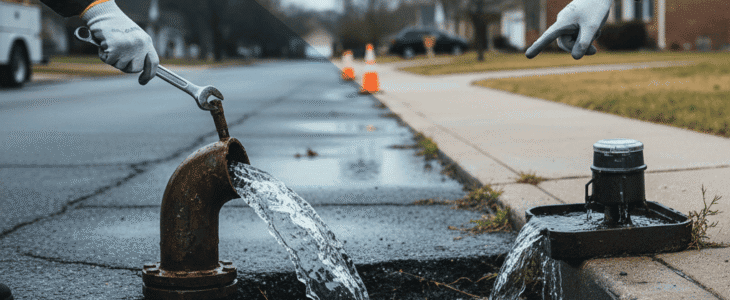
Water leaks on the utility company side of the meter create confusion for homeowners and property managers. When a pipe fails before the meter the immediate reaction is often to look to the homeowner for repair. The reality is more complex and depends on utility rules local ordinances and the physical location of the break. This article explains who typically has responsibility for utility side water leaks and what steps to take when one appears.
We will review typical boundaries between public and private infrastructure explain why some leaks fall under utility care and others do not and offer practical steps for documenting the problem securing temporary fixes and pursuing cost recovery when applicable. Real life examples and simple tips are included so you can act with confidence when a leak crops up near the meter or in the service line outside the home.
Responsibility For Utility Side Water Leaks explained
Most water systems split responsibility at a clear physical point. The utility normally owns and maintains the main lines in the street and the service line up to the meter. Once the meter is passed the homeowner usually takes legal responsibility for the line and any fixtures on private property. That is the standard starting point for determining responsibility for utility side water leaks.
However there are common exceptions. The curb stop or shut off valve may sit on the property owner side in some systems. Some service lines are classified as private mains and remain the owner obligation. Utilities may accept responsibility for the portion of a service they installed or replaced in past repairs. Always confirm the exact jurisdiction with your municipal water provider or by reviewing your recorded property documents.
How utilities define the boundary and typical exceptions
Utilities rely on maps recorded work orders and physical markers to determine which piece of pipe they own. Knowing the common boundary points will help you speak clearly when you call for help. The most frequent control points include the public main the curb stop the meter and the service line to the house.
Public main to meter
The public main is the larger pipe running under the street that serves several properties. Utilities typically repair breaks on the public main and the smaller service line from the main up to the meter. If a leak occurs at the main or between the main and the meter it is usually the utility responsibility to fix the break and to repair street or sidewalk impacts.
Meter to building
Once the water passes through the meter the line is often the homeowner responsibility. That includes leaks inside the property boundary wheel valve fittings and all plumbing fixtures. A few municipalities maintain the meter and service to the curb stop. Knowing the exact limits matters if you need billing relief or wish to recover repair costs.
Immediate steps to take when a leak is found
Act fast to limit damage and to protect your legal position. The moment you notice a steady flow of water or a sudden loss in pressure follow these steps.
- Turn off any convenient house shut off valve to reduce flow inside the building.
- Walk outside to find pooled water sinkholes or wet spots near the curb the meter or the sidewalk.
- Take photos and videos showing the meter its number any visible pipe break and the surrounding area. Time stamped visuals are very useful later.
- Call your water utility to report an active leak on the utility side. Ask for an incident number and a timeline for inspection.
- Contact a licensed plumber for a temporary assessment especially if the leak is outside but affecting the property structure or landscaping.
Documenting the event carefully improves the chance of getting the repair handled by the responsible party and of obtaining a billing adjustment if you were charged for lost water. If the leak is fast and threatens structural safety call emergency services and your utility right away.
If you would like professional on site evaluation and an explanation of who should pay for repairs please contact Brightwater Plumbing for a clear inspection and a written report you can share with your utility provider.
Billing and cost recovery options when the leak is on the utility side
Utilities often offer billing relief for water lost from uncontrollable breaks depending on the circumstances and local policy. Typical remedies include meter adjustments crediting a portion of the bill or full refunds when fault lies with the utility infrastructure. The process usually requires documentation such as repair logs photos and proof that the issue was not within the homeowner control.
High bill disputes
If your usage spikes because of a utility side leak notify the provider quickly. Many utilities maintain a leak adjustment policy that sets a limit on how far back they will review usage and that requires an inspection confirmation. Keep records of all phone calls and names of representatives you speak with.
Insurance claims and liability recovery
Homeowner insurance may cover damage to the structure caused by external leaks even when the utility is responsible for the break. Policies differ so review your declaration page and call your agent. If the utility refuses to accept responsibility and a large claim is at stake consult an attorney about small claims court or a claim for negligent maintenance. Legal paths vary by jurisdiction and often hinge on proofs such as incident reports repair records and municipal code provisions.
Common causes of utility side leaks with real life examples
Understanding why breaks happen helps when you discuss responsibility with the water provider. Frequent causes include corrosion joint failure ground movement and accidental damage from construction. In older neighborhoods cast iron or lead service lines degrade and develop leaks that might appear close to or under the meter.
- Corrosion over decades weakens pipe walls and causes slow leaks. If the utility owns that segment it is often on them to replace it.
- Tree roots can displace pipes. If a root from a private tree invaded the line repairs might be the homeowner responsibility though the utility may still repair the public portion.
- Contractor damage during excavation is common. The party that struck the line can be held liable but the process of resolution may involve the utility insurance and the contractor insurance.
- Temperature extremes can cause small cracks in exposed fittings leading to leaks. Some systems with aging parts have higher failure rates during freeze events.
Example one: a homeowner found saturated soil near the meter and an inspection showed a failed coupling between the main and the meter. The utility accepted responsibility and replaced the coupling. Example two: a homeowner had a leak in the line under their driveway after a private contractor dug. The utility indicated their responsibility ended at the meter and the homeowner pursued the contractor claim.
Preventive measures and long term solutions
Prevention reduces the chance of sudden damage and can lower long term repair costs. Whether the service is owned by the utility or the homeowner consider these steps.
- Request a periodic inspection of the meter and visible service line. Many plumbers offer non invasive checks for external leaks.
- Keep heavy equipment and deep planting away from the service line zone to reduce risk of accidental damage.
- Consider replacing aging private service lines with modern materials when evidence of deterioration appears.
- Maintain easy access to the shut off valve. A working accessible curb stop speeds emergency response and reduces damage.
These measures cannot change public ownership rules but they do reduce the scale of repairs and present clearer evidence if a dispute arises.
Legal and regulatory considerations property owners should know
Laws and utility tariffs set the formal responsibilities and they differ widely across regions. Municipal codes may require utilities to fix certain categories of leaks on their infrastructure while placing limits on homeowner recovery. Easements may grant utilities rights to access parts of private land for maintenance which can influence repairs and cost allocation.
When a dispute arises check the utility tariff the recorded easement and any prior work orders. Many utilities publish service boundary maps and claim procedures online. If your case involves significant repair costs collect written estimates repair photos and all communication with the utility. An independent written inspection from a licensed plumber strengthens a claim when you seek reimbursement or a billing adjustment.
Keep in mind statutes of limitation and appeal deadlines for utility charges. Some utilities require an appeal within a narrow window after the bill issue date.
Final thoughts and next steps
Responsibility for utility side water leaks depends on the physical boundary between public and private infrastructure municipal rules and the specific cause of the break. In most cases the utility covers the public main and the service line up to the meter while the homeowner takes charge beyond that point. Exceptions occur and careful documentation matters when seeking repairs or billing relief.
If you discover a leak act quickly to reduce damage collect photographic evidence and notify your water provider. Obtain a professional on site inspection if the leak threatens property or if you need a written assessment to support a claim. Keep records of all communications and invoices and request an incident number from the utility when you report the problem.
Prompt action protects property value reduces repair complexity and improves the chance of a favorable outcome when a dispute follows. If you need clear guidance on inspection options repair approaches or documentation to support a refund or claim call a licensed plumber and get a written report for the utility. Taking these steps helps you move from uncertainty to a resolved repair with less stress.